Cage-Free Dog Boarding: What It Actually Means (And What It Doesn't)
A term that means different things at different facilities. Here's how to tell.

The term "cage-free" has become synonymous with premium dog boarding. It's splashed across homepages, highlighted in reviews, and often used to justify prices that climb well above $100 per night. But what does it actually mean? And more importantly: does it mean the same thing from one facility to another?
The answer is no. "Cage-free" is unregulated language in the pet boarding industry. It can describe anything from a dog spending eight hours a day in supervised group play to one that never leaves a private suite except for bathroom breaks. That ambiguity is exactly why you need to know what questions to ask—and what red flags to listen for.
The Simple Definition (And Why It's Not That Simple)
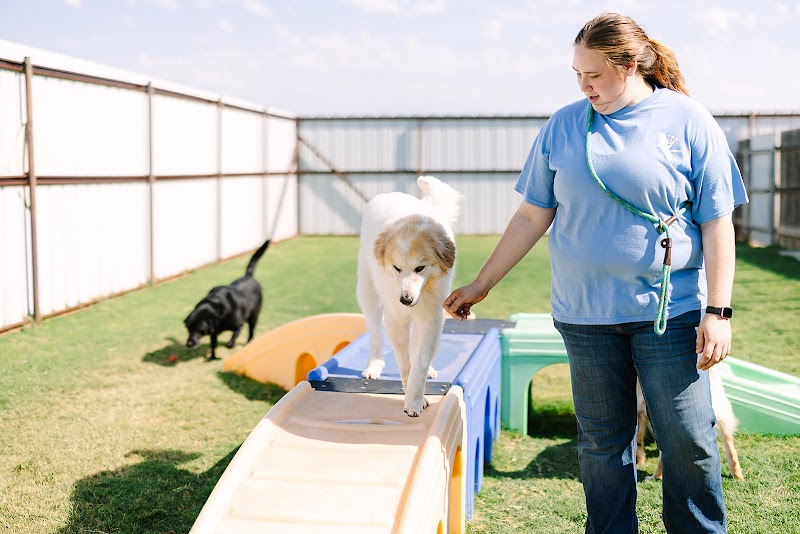
At its core, cage-free boarding means your dog spends designated time in an open, supervised environment rather than confined to a crate or kennel run. That's the marketing version. The operational version is more nuanced.
True cage-free facilities operate on the assumption that dogs are social animals who benefit from supervised interaction with other dogs and space to move freely. The best ones maintain low dog-to-staff ratios (often 4-6 dogs per person during play hours), actively monitor play dynamics, and intervene before conflicts escalate. They also screen incoming dogs carefully—not every dog is suited for group play, and responsible facilities understand that.
But here's where the marketing-to-reality gap opens up: many facilities claim "cage-free" status while actually offering "cage-free during the day." Your dog might spend 6-8 hours in supervised group play, then return to a private suite for the evening. That's not dishonest, exactly, but it's also not the same as 24-hour open play, which is rare and expensive to maintain.
The Variants You'll Actually Encounter
**Full cage-free with group sleep.** A handful of ultra-premium facilities (roughly 745 across our directory) offer genuine 24-hour cage-free environments where dogs spend nights in shared sleeping areas with staff present. This requires extensive training, careful temperament screening, and sometimes separate sleeping pods rather than shared beds. It's the rarest and most costly model.
**Cage-free during business hours + private suites at night.** This is the industry standard for luxury boarding. Dogs enjoy 5-8 hours of supervised play and socialization during the day, then move to private, climate-controlled suites for the evening. Staff supervise overnight, but dogs are individually housed. This model is genuinely better than kennels, more affordable than full cage-free, and works well for most dogs.
**Hybrid suite-with-shared-yard model.** Some facilities offer private suites that open directly to a shared yard or play area, allowing dogs to move between private and social spaces at their own pace. This appeals to anxious dogs who want autonomy and suits multi-dog households traveling together.
Each model has legitimate merit. The mistake is assuming they're equivalent, or that more cage-free hours always equals better care.
Why This Costs What It Costs
Cage-free boarding is expensive to operate, and there are real reasons why:
**Staffing.** A facility offering 6+ hours of daily supervised group play needs multiple staff members on-site, trained to read dog behavior, manage conflicts, and handle medical or behavioral emergencies. A single person can safely supervise 4-6 dogs in play. A 50-dog facility might need 10-12 staff across play rotations. That's a massive payroll.
**Space.** Open play areas need square footage. A 50-dog facility with 6-8 hours of daily group play might require 5,000-10,000 sq ft of climate-controlled play space, plus outdoor yards. Real estate and HVAC costs are non-negotiable.
**Screening.** Legitimate cage-free facilities conduct pre-boarding temperament assessments, often requiring an in-person visit or consultation. They say no to dogs that don't fit their group dynamics—which means turning away revenue. Facilities that never refuse bookings are usually not actually doing group play.
**Liability.** Group play carries higher insurance costs. Injuries happen, even with perfect supervision. Facilities carrying higher liability coverage pass that cost to customers.
If a facility is advertising cage-free at $40-50 per night, ask yourself: can they afford to staff it properly? Most cannot.
The Questions to Ask
When you contact a facility claiming cage-free, use this checklist:
1. **How many hours per day is my dog in group play, and when?** (Specific answer: "9 a.m. to 3 p.m." beats vague "most of the day.") 2. **What's the dog-to-staff ratio during play?** (Answer should be 4:1 to 6:1 at most.) 3. **How do you screen dogs for group compatibility?** (Any reputable facility will ask about your dog's temperament and previous socialization.) 4. **Where does my dog stay at night?** (Private suite, or shared sleeping area?) 5. **What happens if my dog doesn't get along with the group?** (Listen for honest answers like "We rotate them to different playgroups" or "We offer a private suite at no extra charge." Avoid facilities that say "Everyone loves our environment.") 6. **Can you show me video of group play in action?** (Video doesn't lie. Ask to see typical play sessions, not a highlight reel.)
Not Every Dog Wants (Or Needs) Cage-Free
This is the part luxury marketing glosses over: not all dogs thrive in group environments. Some are genuinely more content in a well-appointed private suite with scheduled one-on-one attention, environmental enrichment, and no stress from managing group dynamics.
Senior dogs, dogs with resource guarding tendencies, anxious dogs, and dogs with mobility issues often prefer private accommodations. A responsible facility won't push cage-free on owners whose dogs aren't suited for it. They might even suggest an alternative.
Luxury boarding isn't defined by how much time your dog spends around other dogs—it's defined by how well the facility understands and accommodates your dog's individual needs. Sometimes that's cage-free. Sometimes it's a private suite with heated floors, a webcam, and scheduled playtime with one compatible friend. [Learn more about what actually makes dog boarding "luxury"](/guide/what-makes-dog-boarding-luxury).
The Facilities Doing It Right
If you're seriously considering cage-free, these facilities represent the real deal:
[Mount Pleasant Avenue Premier Canine Villas and Spa](/facility/mount-pleasant-avenue-premier-canine-villas-and-spa-league-city-tx) in League City, TX operates ultra-luxury villa suites with genuine 24/7 supervision and live cameras, so you know exactly what "cage-free" means there.
[Luxury Unleashed](/facility/luxury-unleashed-havre-mt) in Havre, MT is owner-operated with private themed cottages and 24/7 care—a model that puts owner availability above pure capacity.
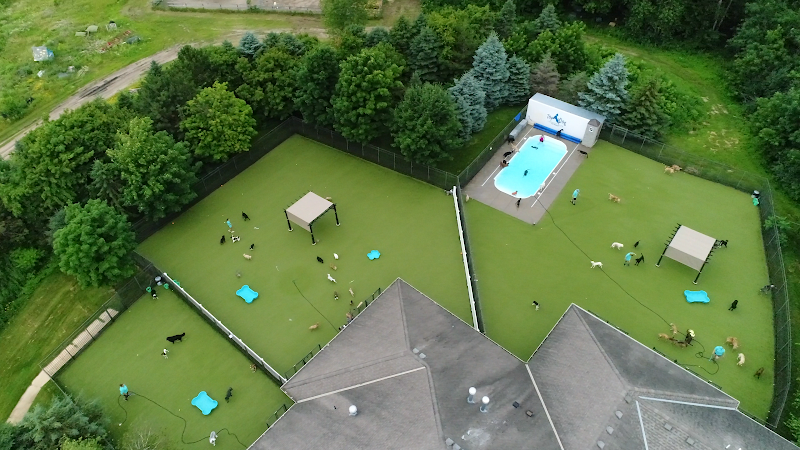
[Top Dog Country Club](/facility/top-dog-country-club-new-germany-mn) in New Germany, MN offers 5-6 hours of daily supervised play across 39 acres, which is the realistic upper bound for most facilities.
[Luxury Acres Pet Resort](/facility/luxury-acres-pet-resort-kendall-ny) in Kendall, NY operates on 100 acres with genuine cage-free design and live-in staff, representing the full-commitment model.
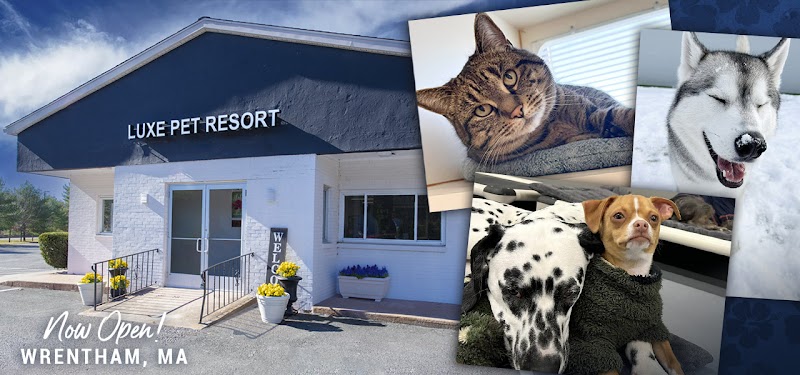
[Luxe Pet Resort](/facility/luxe-pet-resort-wrentham-ma) in Wrentham, MA offers crate-free suites with 24/7 staff and included daycare starting at $85 per night—more transparent about pricing than many competitors.
These aren't the only cage-free options worth considering. [Our full ranking of the most luxurious facilities includes cage-free resorts across every region](/guide/most-luxurious-dog-boarding-facilities), with methodology and pricing transparency.
The Bottom Line
Cage-free is a legitimate operational choice that can genuinely improve your dog's boarding experience—if it's implemented thoughtfully and matches your dog's temperament. But the label alone tells you almost nothing. A facility with 8 hours of daily group play and careful screening is legitimately superior to kennels. A facility that uses "cage-free" as a marketing term while offering minimal supervised interaction is not.
Before you book on cage-free claims alone, call and ask those screening questions. Ask for references. Ask to see a video. Ask about the screening process and what happens if your dog doesn't fit the group. A facility that gives you straight, specific answers has nothing to hide. One that uses vague language or pressure tactics probably hasn't thought this through the way they should have.
Facilities mentioned
Mount Pleasant Avenue Premier Canine Villas and Spa

Luxury Unleashed
Luxury Acres Pet Resort
Top Dog Country Club
Greenleaf Pet Resort Millstone
Luxe Pet Resort
FurBabies Resort and Spa